Juice making · 3 min read
Brix, acidity and pulp: the words on a juice spec sheet
What buyers mean by Brix, acidity, pH and pulp content, and why a plant measures them for every batch.
Published
If you buy juice for a kitchen, sooner or later a supplier hands you a specification sheet. It is a short list of numbers that describe a batch. This guide explains the common ones in plain terms.
Brix: how much is dissolved in the juice
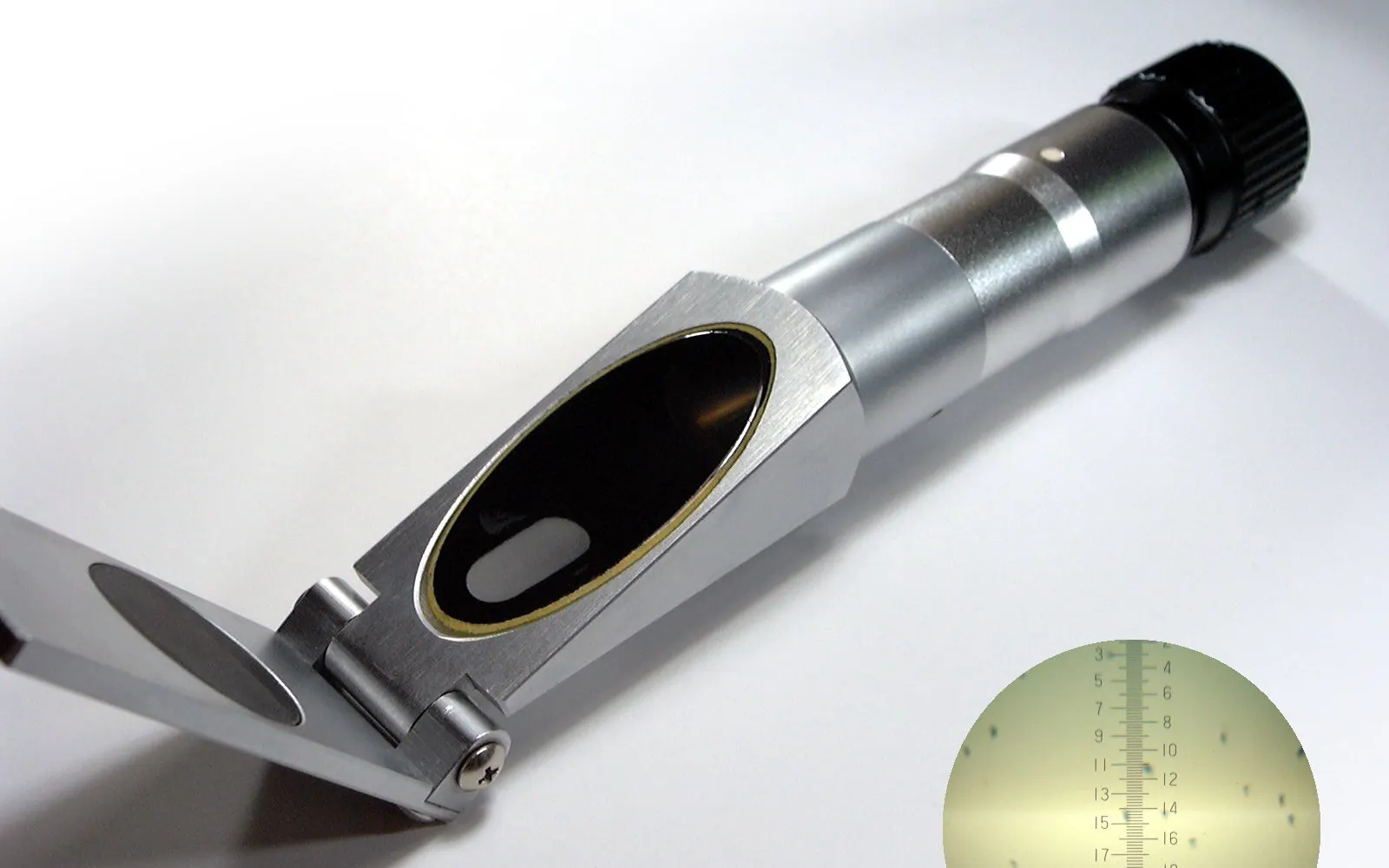
Brix, written °Bx, measures dissolved solids, which in fruit juice are mostly sugars. One degree Brix is about one gram of sugar in 100 grams of liquid. It is read in seconds with a refractometer: a drop of juice goes on a glass prism, and the instrument reads how much the liquid bends light.
Brix tells you how sweet and full-bodied a juice will taste, and it is the first number a plant checks when fruit arrives and again when a batch is blended.
Acidity: the sharpness
Acidity is the amount of fruit acid in the juice. It is measured by titration, where a sample is neutralised with a known solution, and it is usually written as a percentage of citric acid. Lemon and pineapple sit high; mango and guava sit lower.
The Brix-acid ratio: the balance
Neither number means much alone. A juice with high Brix and very low acid tastes flat; one with low Brix and high acid tastes sour. Dividing Brix by acidity gives a ratio that tracks how balanced the juice tastes. Plants use it to keep a flavour steady across a season, as fruit gets sweeter towards the end of the harvest.
pH: how acidic for safety
pH is related to acidity but is not the same thing. It measures how strongly acidic the juice is, on a scale where lower is more acidic. Most fruit juices are below about 4.5. That matters for food safety, because the organisms of greatest concern do not grow in a liquid that acidic, and a short pasteurisation step is enough.
Pulp and fruit content
Pulp content is the share of suspended fruit solids, which gives mango or guava juice its body. Fruit content is how much of the drink comes from fruit at all. Food standards use fruit content to decide what a product may be called on its label, so a juice, a nectar and a ready-to-serve fruit beverage are different products.
What to ask a supplier
- The target Brix and acidity for each flavour, and the range you accept.
- The pack size and how it is stored before and after opening.
- The batch code and date marking, so a pack can be traced.
- A sample from a current batch, tasted chilled, the way you will serve it.
Galafru shares the details for its bulk juices with each trade enquiry.